Nyein Yeik | Laywaddy FM
October 9, 2026
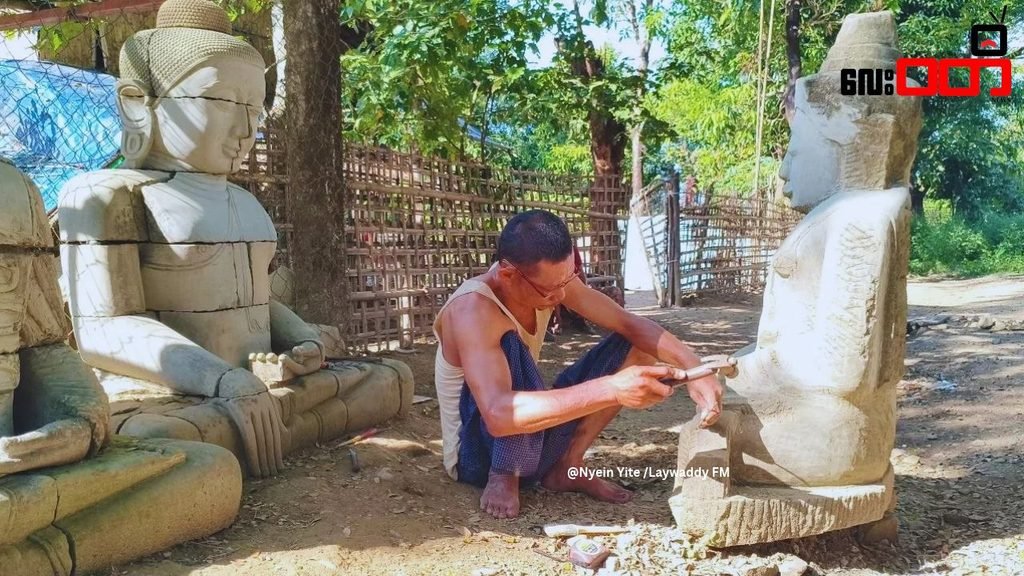
The ancient heritage of Mrauk-U, which remains visible to this day, is a testament to the craftsmanship of stone carvers from bygone eras. Their skill in transforming a simple piece of stone into a work of art has been passed down through generations on the ancient land of Mrauk-U.

Across the ancient sites of Mrauk-U, countless stone carvings have endured through different historical periods, adorning pagodas, temples, and other ancient structures.
Today, however, war and instability have pushed the stone carving artisans of Mrauk-U into one of the darkest and most difficult periods in their history.
Not only are they struggling to pass their skills on to the next generation, but they are also finding it increasingly difficult to sustain their own livelihoods.
“Stone carving is a valuable asset for the entire Rakhine people. I am proud to earn my living through this craft,” said U Tun Hlaing, a stone carving artisan from the Mrauk-U archaeological area.
Now 60 years old, U Tun Hlaing fondly recalls his first experience in stone carving, when he began working as an apprentice under his master at the Lawkananda Pagoda.
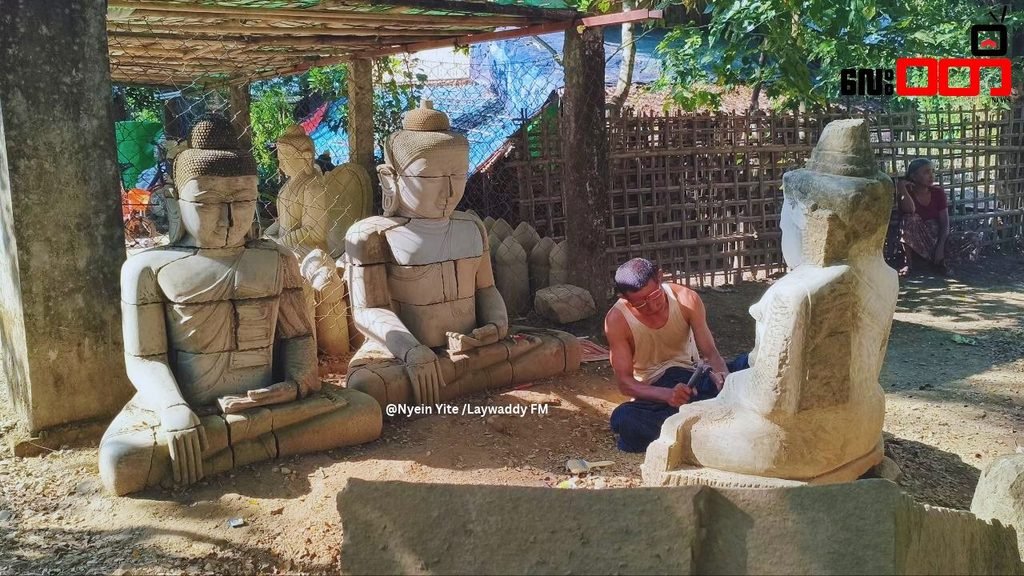
“When I was young, I first learned this craft at the Lawkananda Pagoda under Saya Kyaw Aye. Back then, I studied day and night without sleeping. My master taught me everything without withholding any knowledge,” he recalled.
For U Tun Hlaing, stone carving is not merely a means of earning a living. It is also a way of preserving the history, culture, and artistic heritage of Mrauk-U.
He has also traveled to different parts of Myanmar to assist people who wished to build pagodas, contributing his craftsmanship to religious structures across the country.
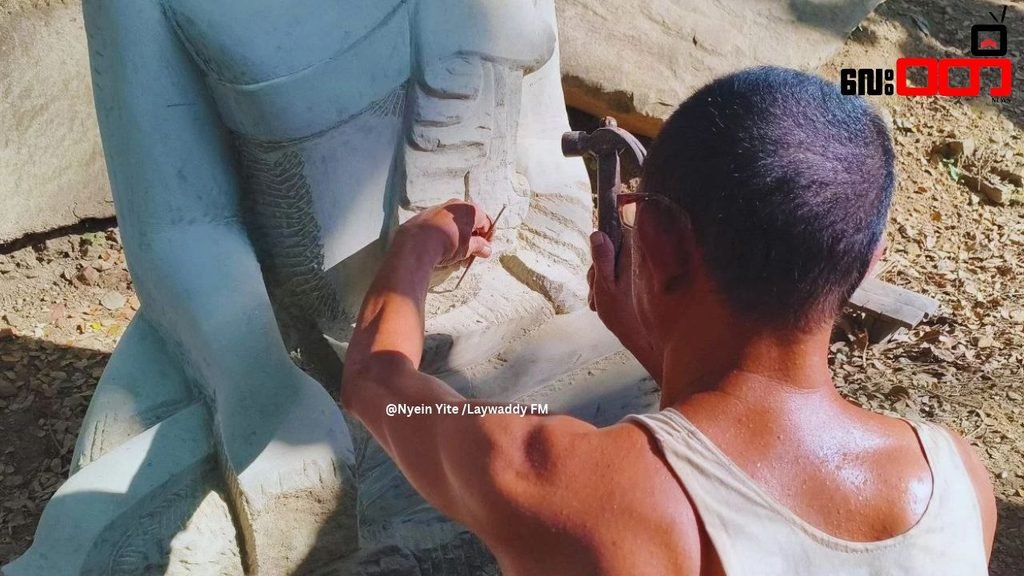
“There was a large pagoda built in Naypyidaw with 90 arms and 90 stupas, covering an area of one acre. It took three years and six months to complete,” he shared, recounting his experience.
The heritage of an ancient city cannot be fully preserved simply by safeguarding its pagodas, temples, and stone carvings.
The artisans who create these works of art and the skills they possess must also be kept alive.
In particular, the ongoing conflict and airstrikes in Rakhine State are not only affecting the livelihoods and socioeconomic conditions of local people but are also having a direct impact on traditional handicraft industries.
“Nowadays, the economy is in bad shape, and people can no longer afford to make donations. If we are unable to continue working like this, we will have no income. Without income, it becomes difficult to put food on the table. I am even considering switching to another job,” he explained, describing the growing challenges of sustaining his livelihood.
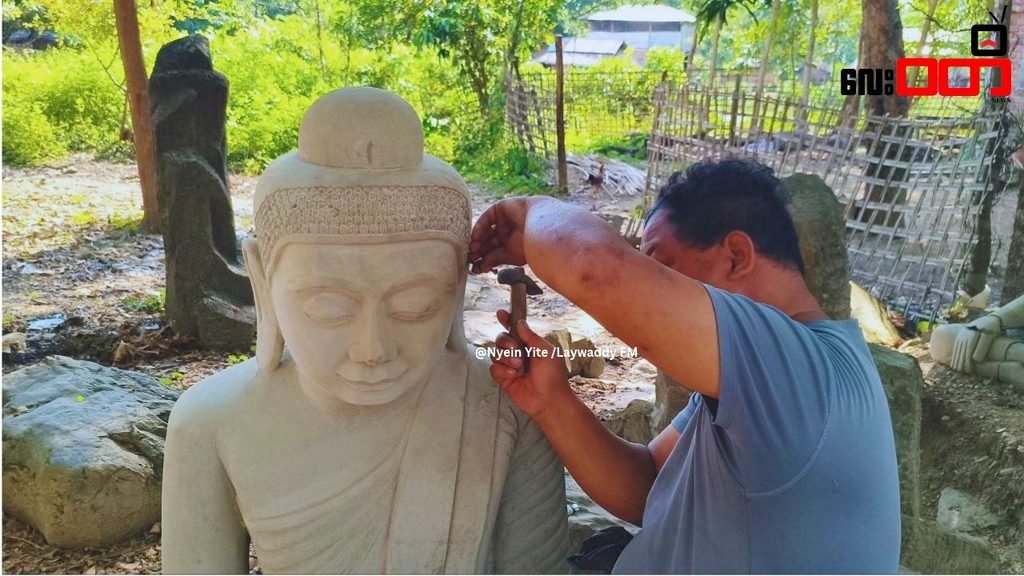
For an ordinary businessperson or manual laborer, switching from one job to another may not be unusual.
But when a skilled artisan, someone capable of bringing ancient heritage to life, is forced to abandon their craft, it may signal the beginning of the disappearance of that art form.
The ongoing conflict has made travel difficult, limited access to raw materials and tools, and caused a decline in customers and markets. These challenges have increasingly threatened the livelihoods of stone carving artisans.
The risk of airstrikes has also made it unsafe for them to work regularly.
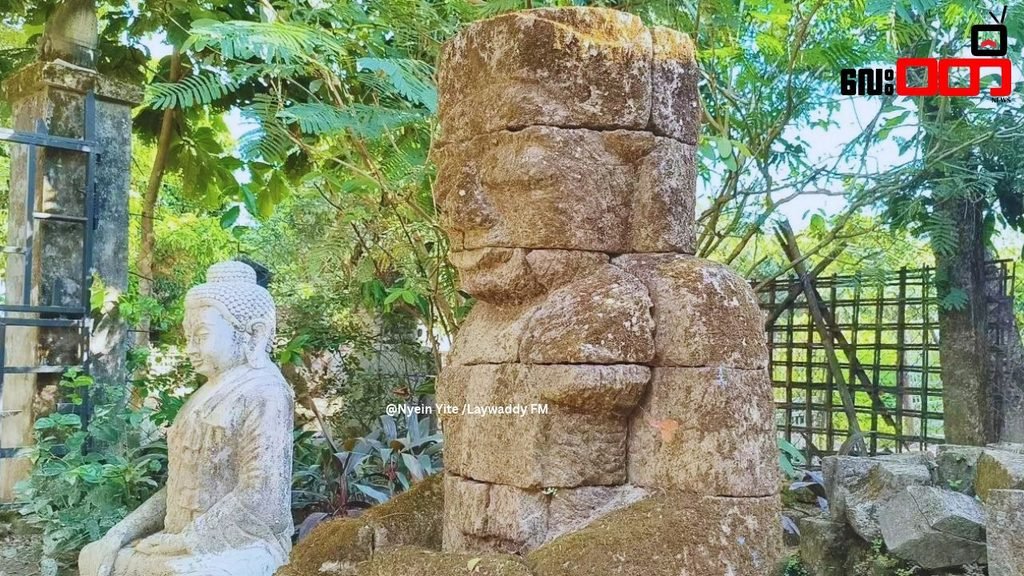
Those who once earned a living by creating artistic masterpieces are now struggling to meet even their daily basic needs.
“If the economy continues to deteriorate and things do not improve, these skills will disappear. They could truly be lost forever,” he lamented while putting the finishing touches on a pagoda he was carving.
Despite the exhausting heat of the midday sun and sweat pouring down his body, his hands remain ready to transform rough stones into works of art.
Will the hands that once carved masterpieces be forced to turn to another, more practical means of earning a living? Or will they continue to move across the rough stones, preserving an art passed down through generations?
The answer remains uncertain………..