By Kankaw Ni | Laywaddy FM
November 3, 2026
Indigenous Myo communities living in Maungdaw District, Rakhine State, are struggling to survive by venturing into the Mayu Mountains each day to dig for ship yams and katet yams, locally known as “North Yams,” according to local residents.
The Mayu mountain range is an area where armed groups operate. Residents are therefore forced to risk their lives to collect these wild yams for their daily livelihoods.
“About 75 percent of households in our Mu Yu village earn their living by digging for katet yams, also known as North Yams, and ship yams. However, the income from selling these yams is not enough to cover our basic living expenses,” a local woman, Ma Nu Nu, told Laywaddy FM.
To collect the yams, men and women gather at the village entrance around 6 a.m., carrying knives, machetes, hoes, and baskets on their backs before heading into the mountains.
They have to walk for approximately one and a half hours to reach the yam-digging areas. Due to the threat of wild elephants, women are afraid to go alone and must be accompanied by at least two men, residents said.
“If we do not leave early in the morning, we will not have enough time. Depending on the type of yam, we have to dig between two and seven feet deep to find one. To get a ship yam, we have to dig as deep as seven feet. We usually return home at around 3:30 or 4 p.m.,” Ma Nu Nu said.
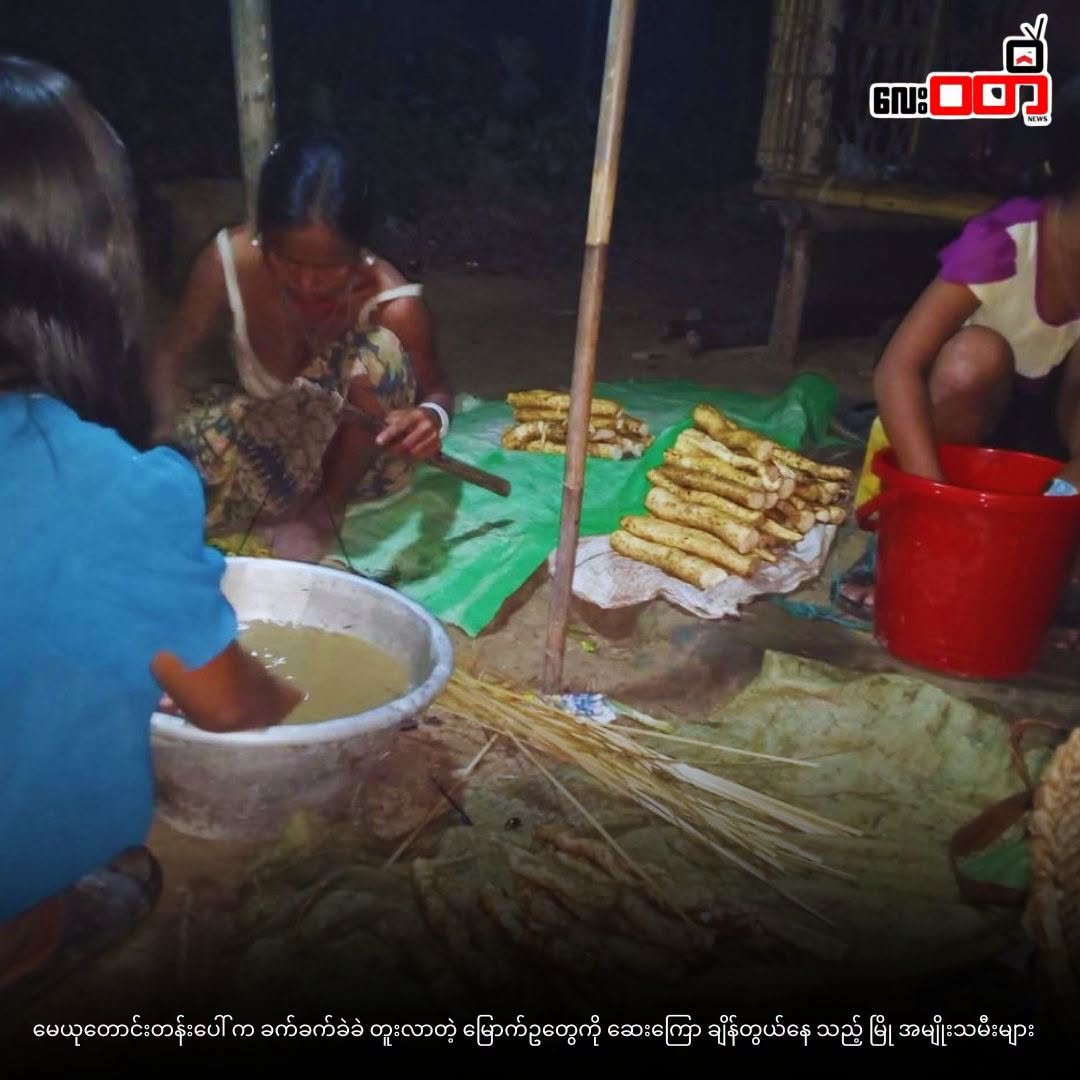
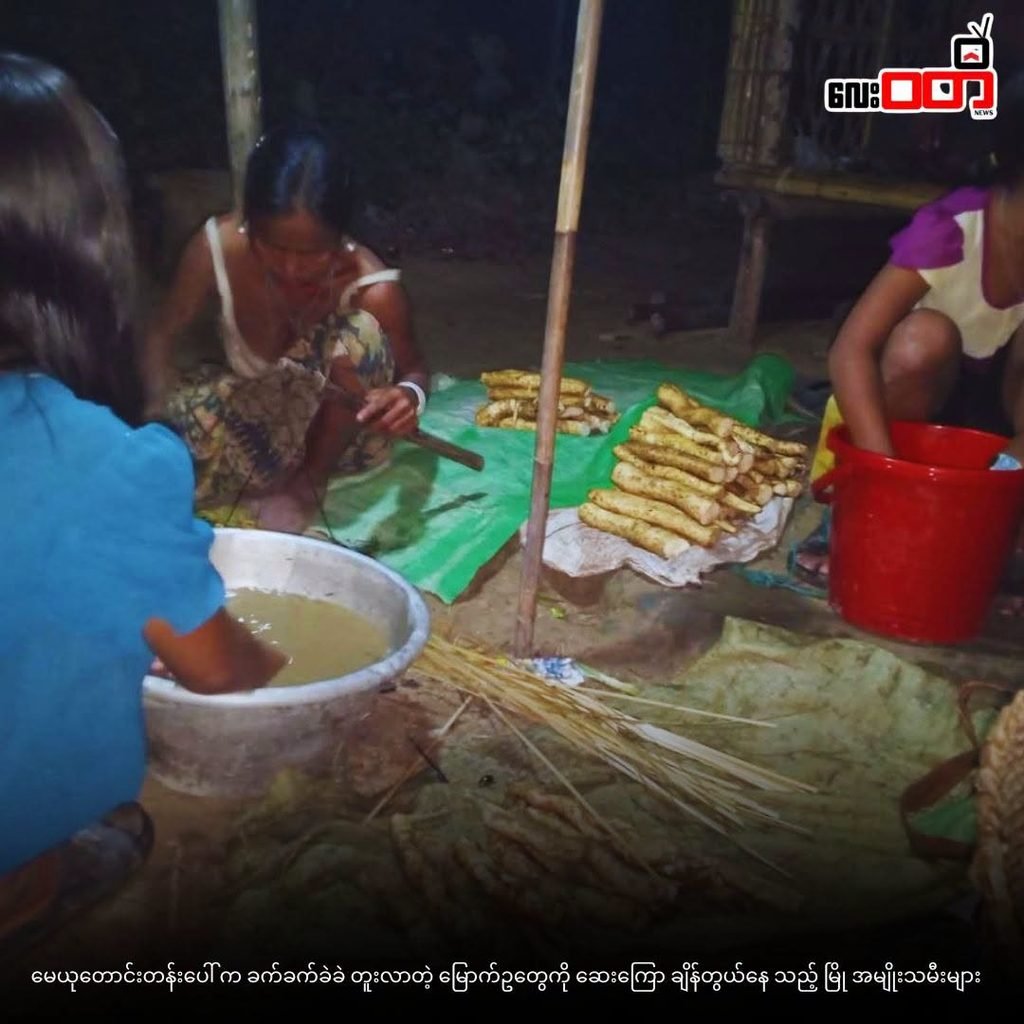
After returning from the mountains, the women wash the yams and prepare them for sale at the market the following morning.

The yams are washed, tied together using “nee,” a rope made from bamboo, and then weighed using a traditional balance scale. If they fail to prepare the yams in advance, they may miss the morning market and have to carry them in baskets to sell door-to-door in nearby villages, she said.
“A bundle of ship yams sells for only 1,500 Myanmar kyats. Some days, we earn 5,000 kyats, while on other days we may earn 7,000 or 8,000 kyats. Even though we dig and sell yams every day, we still cannot make ends meet for our families,” Ma Nu Nu said.

Upon returning home, some breastfeeding mothers cannot immediately sit down to eat. Instead, they must first breastfeed their young children who have been left at home, she added.
Mu Yu village is located along the road between Kyauk Pandu and Sete Pyin villages. In addition to severe livelihood difficulties, residents are also facing challenges related to education, healthcare, and access to drinking water.
Households with larger family sizes are experiencing even greater difficulties in meeting their daily food needs with their limited income.

“The price of a sack of rice used to be 75,000 kyats, but now we have to pay 130,000 kyats. CSOs and NGOs that previously provided food assistance no longer come to our village.
“When prices were lower, a family of nine could manage with three bundles of rice. But now, because of the worsening economic situation, we have to reduce the amount of rice we cook to just eight condensed milk tins for a single meal,” Ma Nu Nu said in a trembling voice.
She also said that families with members suffering from chronic illnesses in the village are struggling to share insufficient food among themselves. Some children from these families have also been unable to continue their education due to the hardships.
“Regarding healthcare, we receive treatment from nurses in our community. However, if our condition does not improve, we cannot afford to go to a hospital or clinic. So, we have no choice but to leave the illness untreated,” she said.
According to local residents, most villages in areas under the control of the Arakan Army (AA), including Mu Yu village, previously received monthly food assistance from civil society organizations and NGOs.
However, humanitarian organizations have not reached these communities for more than four months, leaving residents increasingly vulnerable to food insecurity and other essential needs.