By Dwa Rakhine, Laywaddy FM
Translator – Alice Wai

Stretching along a narrow coastal strip between the Bay of Bengal and the western mountain range, Arakan bears the alternating burdens of both war and natural disaster.
Sitting directly on the Bay of Bengal, the region is battered every year not only by cyclones that make direct landfall, but also by the fringe effects of storms that pass nearby.
Natural disasters arriving from the sea are not the only danger local Rakhine communities must contend with. They also bear the consequences—both fortunate and unfortunate—of the Kaladan, Lemro, Mayu, and Naaf rivers, which flow down from the Arakan mountain range and the Chin Hills.
For this reason, cyclones, floods, and landslides are nothing unusual for the people of Arakan.
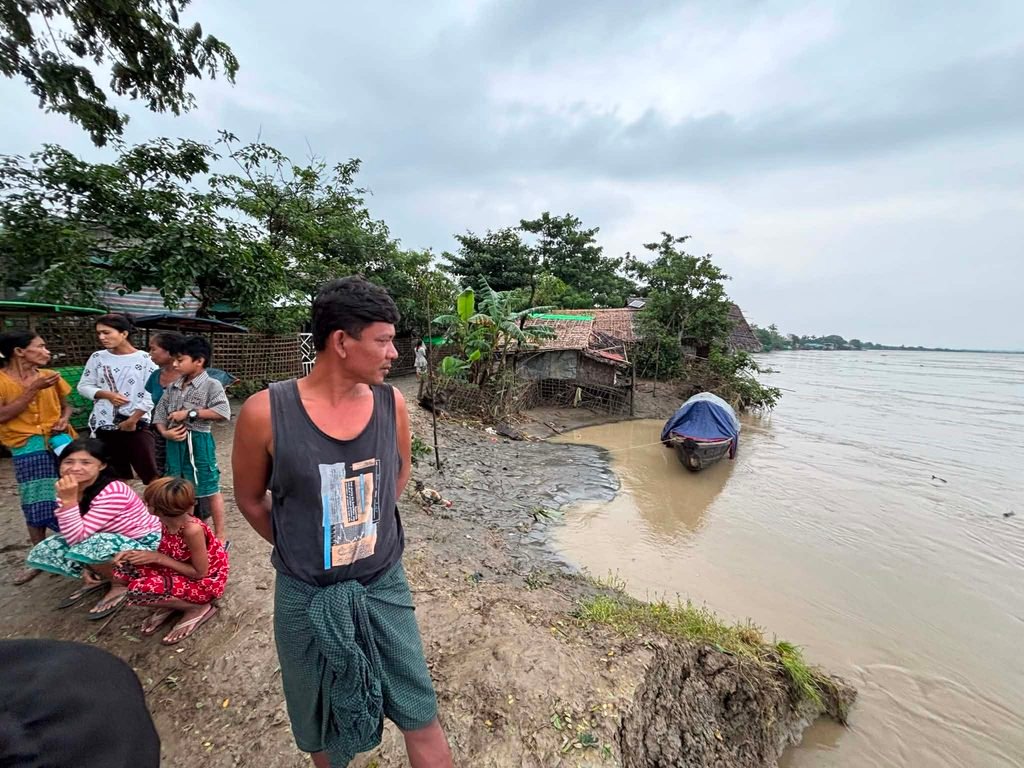
But as natural disasters grow more severe and more destructive with each passing year, they can no longer simply be shrugged off as they once were.
This is especially true for local residents already struggling to survive amid the flames of war and airstrikes, for whom facing the seasonal disasters that arrive every monsoon—once endured with resilience—has now become far more difficult.
Facing Floods Calamity Before Escaping the War Calamity
The record-breaking floods that struck the Rakhine region in 2026 plunged many villages back into severe hardship within a short span of time.

Hundreds of households lost their homes entirely, swept away by the rising river.
For Daw Sein Yin Phyu, owner of the “Sein Yin Phyu Rice Shop” in Anjanapur, Minbya town, this flood was more than just a natural disaster.
It was a second calamity, striking just as she was trying to rebuild her life after escaping the horrors of war.
“My shop and my home were attached. Everything I had was invested in that shop. The whole thing collapsed and was swept away by the water,” Daw Sein Yin Phyu said.
She spoke while sorting through the corrugated tin sheets she had managed to salvage from the shop.
These tin sheets were pulled free just as the entire shop was about to be swept away entirely by the current.
Now, those tin sheets are essentially all that remains of Daw Sein Yin Phyu’s possessions.
Watching helplessly as her shop, along with her two children whose hands she held tightly, was swept away by the floodwaters brought back memories of what she endured during the fighting.
Daw Sein Yin Phyu is the female head of household who, ever since the battle for control of Minbya, has struggled to rebuild her family’s life starting from a state of displacement.
During the war, she fled amid the sounds of bombs and gunfire together with her two children, surviving on nothing but a mother’s determination and sheer willpower.
Having survived the calamity of weapons and war, she now finds herself facing, once again, a calamity tied to natural disaster and famine.

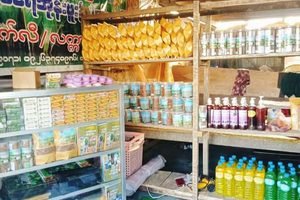
With no husband to rely on, and determined to raise her two underage children on her own, Daw Sein Yin Phyu rented a small shop space in Paung Zeik ward,Anjanapur, and opened the “Sein Yin Phyu Rice Shop.”
In the post-war period, as trade resumed with goods being transported from the Kyaukphu side, the Anjanapur market in Minbya gradually came back to life.
Relying on fellow market vendors and customers coming from near and far, she was able to support her family through her small shop.
But realizing that paying rent left little to no profit for all her effort, she decided to buy the shop space outright.
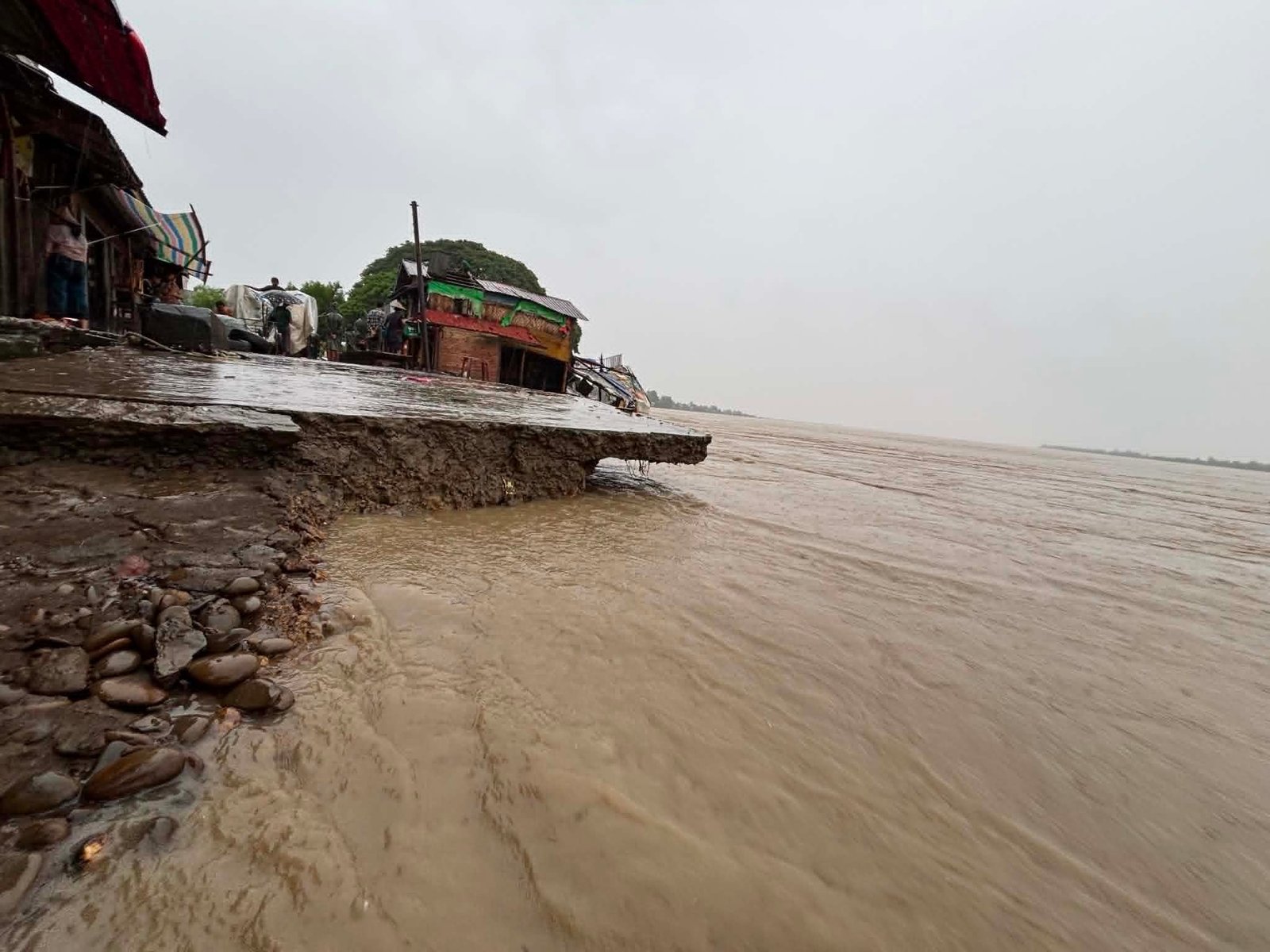
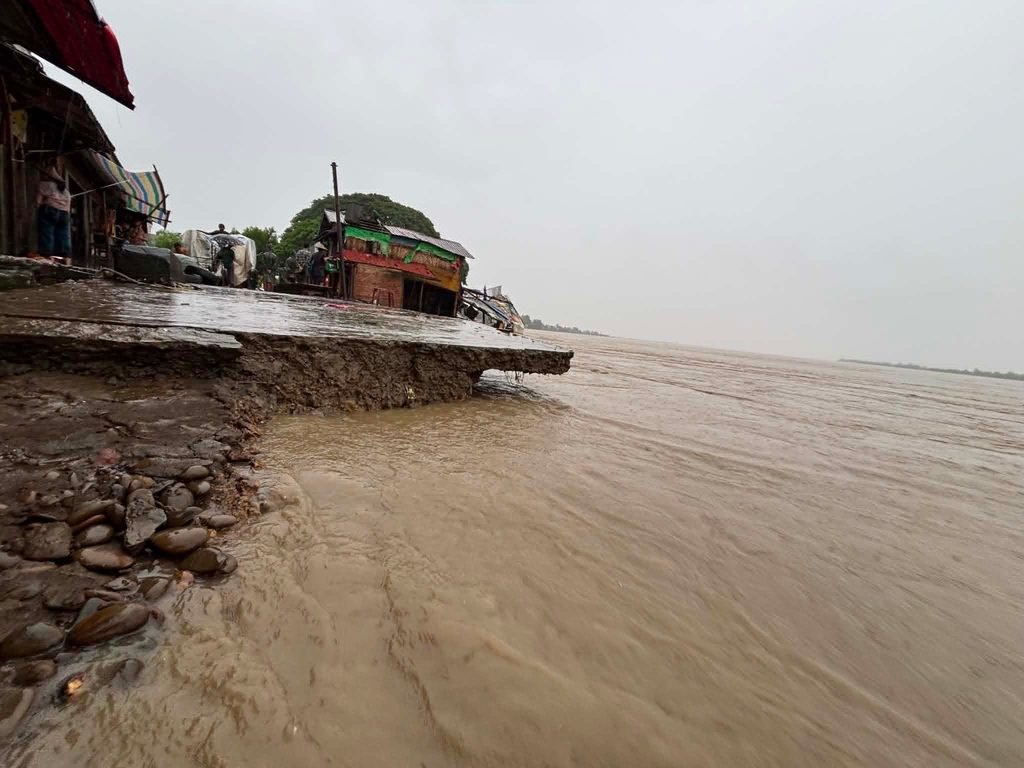
In July 2026, having just finished paying for it in full, within less than a week the small shop—located along the banks of the Lemro River—was entirely swept away by the floodwaters, along with everything in it.
As a result, Daw Sein Yin Phyu, mother of two and head of her household, lost not only her livelihood but also her home, becoming homeless for a second time.
But she is far from the only one enduring disaster after disaster. More than 50 households in her market area and township alone are also grappling with losses caused by this natural disaster.
The River Is Slowly Swallowing the City
U Hla Thein Maung, administrator of Minbagyi ward in Anjanapur, says the danger of riverbank erosion from the Lemro River is not a new problem.
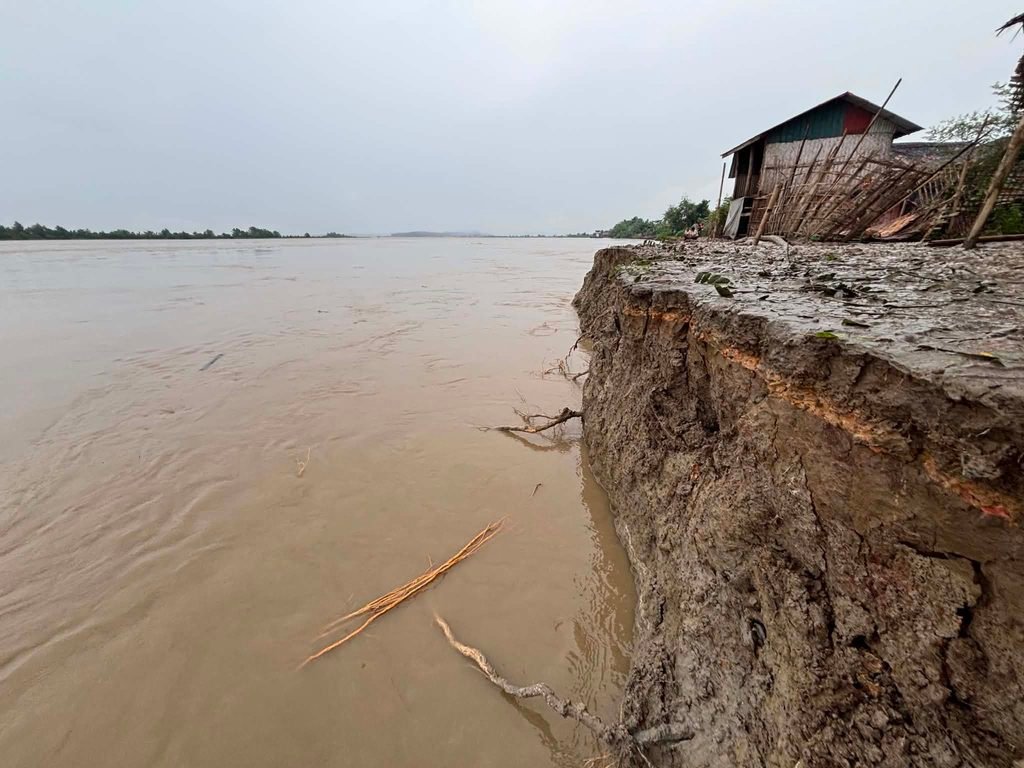
“There used to be about two riverside wards’ worth of houses in front of these wards that have already been swept into the river. Successive governments were never able to reinforce the town against this,” he said.
Along the Lemro riverbank in Anjanapur’s Pyi Taw Hla ward, U Soe Tint ward, and Shwe Pyi Soe ward, more than 50 homes and shops have collapsed and been swept into the river due to erosion.
A similar riverbank collapse also occurred in Kyein Chaung village, Maungdaw Township, where five buildings—including a hospital—collapsed and were destroyed.
The 2026 monsoon season has been marked by a continuous string of extreme rainfall events, as well as ongoing landslides and land collapses.
For people already struggling to rebuild lives shattered by war, these natural disasters feel like fresh wounds inflicted on top of old ones.
Following prolonged rainfall and flooding, entire villages have also been hit by outbreaks of malaria.
Most notably, in Waithali village, Mrauk-U Township, an outbreak of malaria and dengue fever swept through the entire village, taking on the character of an epidemic.
At least three villagers died in quick succession. The Arakan government’s health department itself issued a notice urging that any epidemic-like disease outbreaks following flooding be reported as quickly as possible.
The Root Causes Behind the Three Calamities
Environmental experts warn that reducing future disaster risk requires resisting military dictatorship and protecting the natural environment simultaneously—one cannot come at the expense of the other.
This is especially critical for the Rakhine region, which faces the Bay of Bengal and bears the consequences, both good and bad, of the four major rivers flowing down from its mountains and forested highlands—making deforestation prevention one of the most urgent needs of all.
According to data from Global Forest Watch (GFW), the Rakhine region lost approximately 220,000 hectares of tree cover between 2001 and 2025.
This extensive deforestation has left the ground unable to retain water underground, causing rainfall to run off rapidly and resulting in landslides and land collapses.
A Calamity Not Yet Over
Arakan is a region that bears the brunt of storms arriving from the sea, as well as the dangers posed by river waters flowing down from the mountains.
The people of Arakan are simultaneously confronting natural disaster, the ravages of war, and economic crisis. Just as Buddhist teaching describes three great calamities—the calamity of weapons, the calamity of famine, and the calamity of disease—the people of Arakan today likewise find themselves simultaneously enduring war, natural disaster, and crises of daily survival.
Putting out the fires of war is critical—but if environmental destruction is not brought under control, the people of Arakan are likely to continue facing even more severe flooding, landslides, and cyclone damage in the years ahead.